
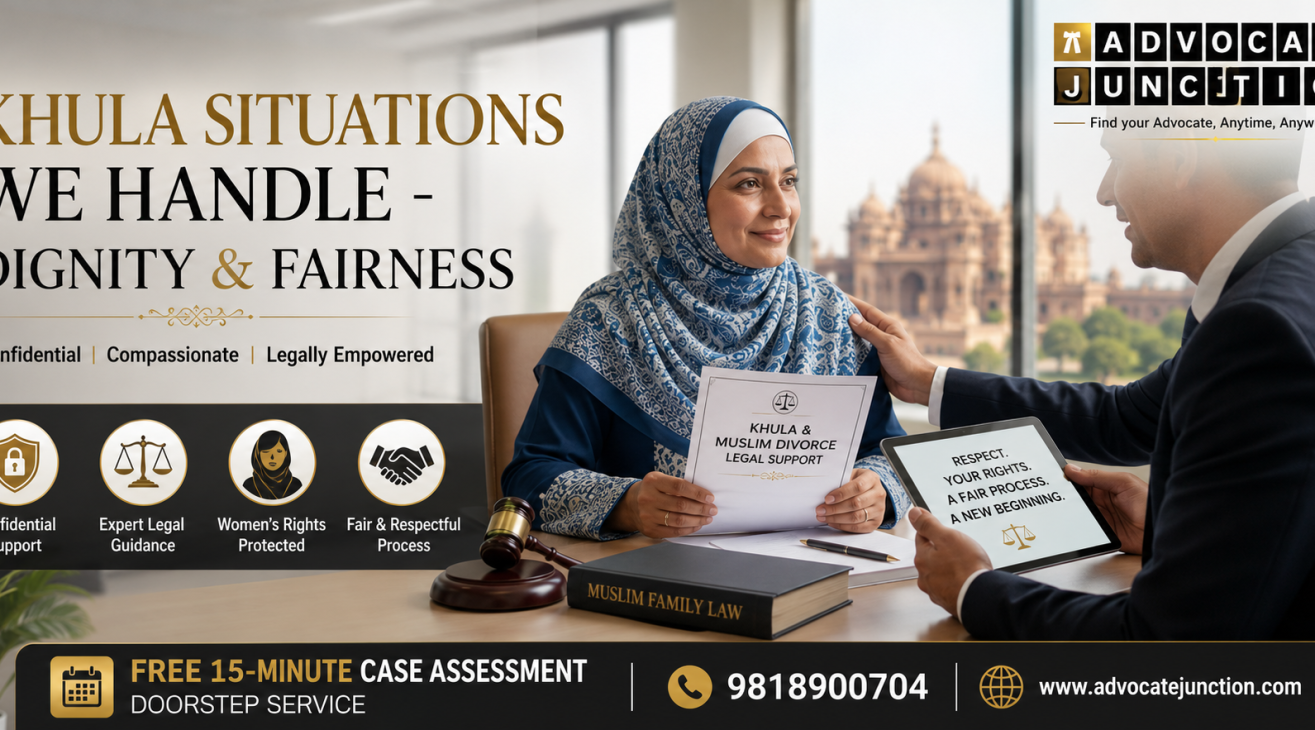
Khula: A Muslim Woman’s Right to Divorce and How to Get It Recognised
Khula is a Muslim woman’s own right to seek divorce — a right that is often misunderstood, sometimes denied, but firmly recognised, and one a Family Court can formally declare.
Ayesha Decides She Has Had Enough
| For six years Ayesha had tried. The marriage had grown cold, then difficult, then something she dreaded waking up to. There was no single dramatic wrong she could point to — just the slow certainty that this was not a life she could continue. She wanted out. And then came the voice, from relatives and even from within: ‘But you’re the wife. Divorce isn’t yours to ask for.’
That belief — that a Muslim woman cannot herself seek to end a marriage — kept Ayesha trapped far longer than the marriage itself did. When she finally learned that it was untrue, that Islamic law gave her a named, recognised right to seek divorce, something shifted. The right had a name: Khula. |
Ayesha’s misunderstanding is extraordinarily common, and it costs women years. So let us be clear about what Khula is, how it works, and how a woman can have it formally recognised.
What Khula Is
Khula is a form of divorce under Muslim Personal Law that is initiated by the wife. Where a wife wishes to be released from her marriage, she can seek Khula, typically by agreeing to relinquish or return her dower (mehr) or a part of it, with the divorce taking effect through this process. In essence, it is the wife’s counterpart to the husband’s ability to initiate divorce — her own recognised route out of a marriage she no longer wishes to remain in.
The defining feature of Khula is that it is the wife who initiates it. This directly answers the belief that trapped Ayesha. A Muslim woman is not dependent solely on her husband’s will to end a marriage; Khula is her own avenue, recognised under Muslim Personal Law.
Khula and Mubarat — the Difference
These two are often confused, so here is the clean distinction:
- Khula is initiated by the wife. She seeks release from the marriage, typically involving the return or relinquishment of her mehr, with the husband’s consent to the arrangement.
- Mubarat is divorce by mutual consent, where both husband and wife desire the separation and agree to release one another.
Both are recognised modes of divorce under Muslim Personal Law. The difference lies in the origin of the desire to separate — Khula begins with the wife’s wish to be released, while Mubarat begins with a shared, mutual wish. For a woman like Ayesha, whose husband was indifferent rather than mutually willing, Khula is the route that centres on her right to initiate.
Getting It Officially Recognised — the Family Court
Just as with Mubarat, a woman who has obtained divorce through Khula may need official proof of her changed marital status — for remarriage, documentation, property, and to prevent any later denial. Here too, the Family Court has a role.
Under Section 7 of the Family Courts Act, Family Courts are empowered to declare the matrimonial status of parties. Courts have recognised that where a divorce has taken place under Muslim Personal Law through a recognised mode, a party can seek a declaration of that dissolved status. This turns the personal-law divorce into an officially recognised, court-declared status — giving a woman like Ayesha a clean, public document confirming she is divorced.
| Protecting the Woman’s Rights in Khula
While Khula often involves the wife relinquishing or returning mehr, a woman should not be pressured into surrendering more than the situation fairly requires, and matters such as the maintenance of any children remain important and separate considerations. An amicable exit should still be a fair one. Good legal guidance ensures a woman exercises her right to Khula without signing away entitlements she should retain, particularly those concerning her children. |
Frequently Asked Questions
Can a Muslim woman herself seek divorce?
Yes. This is a widespread misunderstanding. Under Muslim Personal Law, a wife has recognised avenues to seek divorce, and Khula is the principal one initiated by the wife — where she seeks release from the marriage, typically involving the return or relinquishment of her mehr. A Muslim woman is not dependent solely on her husband’s will to end a marriage.
What is the difference between Khula and Mubarat?
Khula is initiated by the wife, who seeks to be released from the marriage. Mubarat is divorce by mutual consent, where both spouses desire and agree to the separation. Both are recognised modes of divorce under Muslim Personal Law; the difference is in who initiates and whether the desire to separate is one-sided in origin or mutual.
Do I have to give up my mehr in Khula?
Khula commonly involves the wife relinquishing or returning her mehr, or a part of it, as part of the process. However, a woman should not be pressured into surrendering more than is fair, and separate matters — particularly the maintenance of any children — remain important considerations. Legal guidance helps ensure you exercise your right to Khula without unfairly losing entitlements you should keep.
Can a Family Court recognise my Khula divorce?
Family Courts are empowered under Section 7 of the Family Courts Act to declare the matrimonial status of parties. Where a divorce has taken place under Muslim Personal Law through a recognised mode, you can seek a declaration confirming your dissolved status. This gives you official, public proof of your divorce, useful for remarriage, documentation, and property, and to prevent any later denial.
A Right She ( Ayesha) Always Had
What freed Ayesha in the end was not a change in the law — the right had always been hers. What changed was that she finally knew it. Khula gave her name to a door she had been told did not exist, and walking through it, with fair terms and official recognition, let her reclaim a life she had almost given up on.
At AdvocateJunction, we help Muslim women across Delhi NCR exercise their right to Khula — guiding the process, protecting fairness on mehr and children, and obtaining a Family Court declaration of divorced status. We work with sensitivity and confidentiality, at your doorstep.
Here is a copy-optimized, highly scannable version designed for digital marketing and landing page layouts.
Khula & Divorce Rights for Muslim Women
Dignity, Fairness, and Clear Legal Guidance — Delhi NCR
A Muslim woman is not dependent on her husband’s will alone. Khula is your recognized right to initiate divorce. We help you navigate this process with absolute clarity and absolute respect.
Custom Legal Solutions We Handle
-
Initiating Khula | Step-by-step guidance for women exercising their independent right to end a marriage.
-
Official Declarations | Securing a formal family court declaration if you have already separated via Khula and need definitive legal proof.
-
Khula vs. Mubarat | Expert assessment of your situation to determine if a unilateral right (Khula) or mutual consent (Mubarat) is the most efficient route.
-
Protecting Your Rights | Ensuring a fair exit, safe custody planning, and preventing the unnecessary surrender of your financial rights (Mehr).
You do not have to navigate complex legal procedures alone. Get clear answers at your doorstep.
Get a FREE 15-Minute Case Assessment
Our Advocate will come directly to your convenient location in Delhi NCR, if you book Doostep legal service
-
📱 WhatsApp: +91-9818900704
-
🌐 Website: advocatejunction.com
-
📍 Service Area: Delhi NCR Doorstep Legal Service
Related Articles on AdvocateJunction
- Muslim Mutual Consent Divorce (Mubarat) — Family Court Decree
- Legal Rights of Women in India
- How to Claim Maintenance from Husband in Delhi
- Child Custody Rights in India – A guide for parents
© 2026 AdvocateJunction. All rights reserved. | advocatejunction.com | For informational purposes only. Not legal advice.