
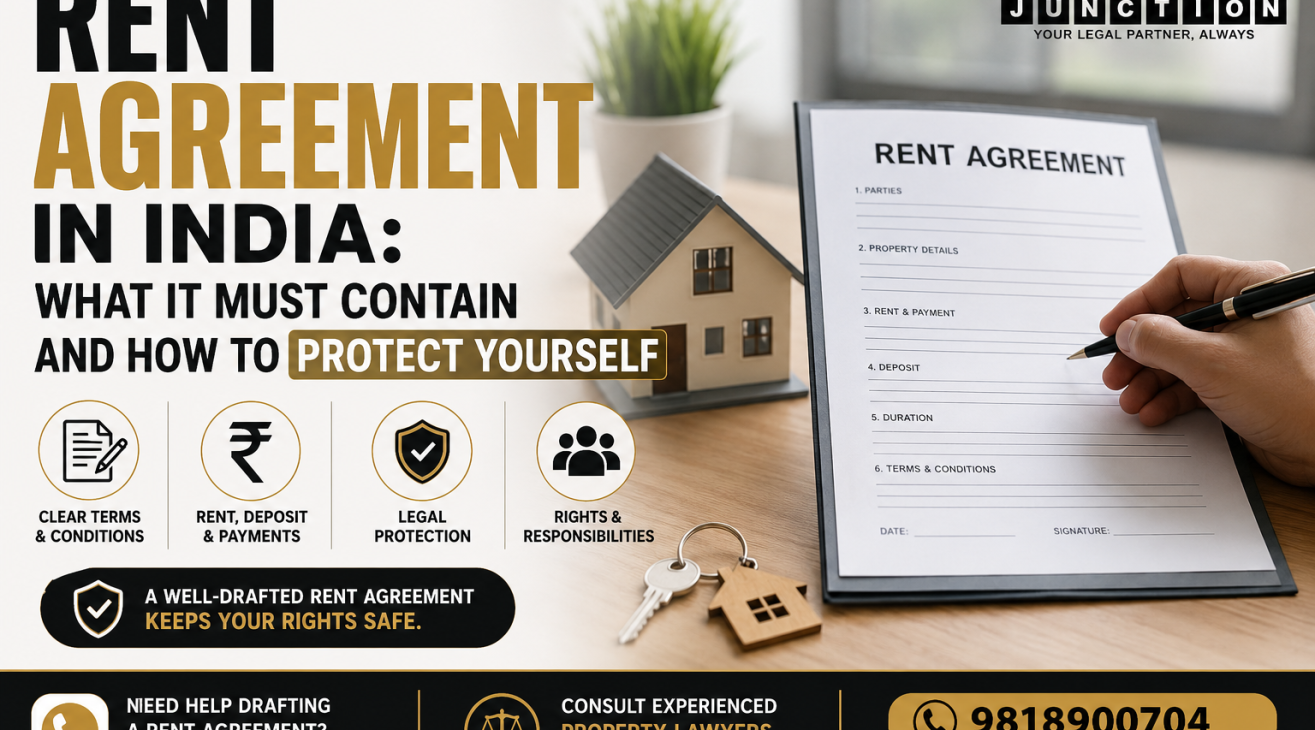
Rent Agreement in India: What It Must Contain and How to Protect Yourself
A rent agreement may look like just another document, but when a disagreement arises, it often becomes the most important piece of paper in the room. Whether you’re a landlord renting out your property or a tenant moving into a new home, a well-written rent agreement can prevent misunderstandings, protect your money, and save you from unnecessary legal disputes.
A Rent Agreement Everyone Signs and very few actually Read
Think about the last time you rented a house or gave one on rent. How much time did you actually spend reading the agreement?
For most people, the answer is probably less than five minutes.
They check the monthly rent, the security deposit, the duration, and then sign. The keys are handed over, everyone is happy, and life moves on.
The real problems usually begin months later.
The landlord refuses to return the security deposit. The tenant suddenly receives an eviction notice. Someone argues over who should pay for repairs. Both sides then rush to read the same agreement they signed without paying much attention.
Sometimes the agreement doesn’t answer the question at all.
Sometimes the answer was already there—but nobody noticed it before signing.
A rent agreement isn’t just another form to complete. It’s the document that decides what both the landlord and the tenant can expect from each other if something goes wrong.
In this guide, we’ll explain what every rent agreement should contain, why certain clauses matter, and the simple checks you should make before putting your signature on it.
Why Are Most Rent Agreements for Only 11 Months?
If you’ve rented a house before, you’ve probably noticed something interesting—most rent agreements are for 11 months.That’s not a coincidence.
In India, a lease of 12 months or more generally requires compulsory registration and attracts additional legal formalities, including higher stamp duty in many states. By keeping the agreement for 11 months, landlords and tenants can usually avoid mandatory registration while keeping the paperwork simple.
Once the 11-month period ends, both parties can renew the agreement if they wish to continue the tenancy.
That said, this doesn’t mean an 11-month agreement is always the best choice.
If you’re renting a commercial property, entering into a long-term lease, or simply want stronger legal certainty, registering the agreement is often the wiser option. Spending a little extra time and money today can save a lot of trouble later.
Before You Sign a Rent Agreement, Check These Things First
Many people assume every rent agreement is the same. It isn’t.
Some agreements clearly protect both parties. Others leave important questions unanswered, creating confusion when a dispute arises.
Before signing, take a few minutes to go through the agreement carefully. Make sure it clearly explains not just how the tenancy begins, but also how everyday issues and unexpected situations will be handled.
The next section covers the most important clauses that every rent agreement should include—and why each one matters.
What Every Rent Agreement Should Include
A rent agreement is more than a document with names and signatures. It’s a written understanding between the landlord and the tenant about how the tenancy will work.
If an important point isn’t clearly mentioned, there’s a good chance it could become a disagreement later.
Here are the clauses you should always look for before signing.
1. Details of the Landlord, Tenant and Property
This may sound obvious, but it’s the first thing you should check.
The agreement should mention the full names, addresses and identity details of both the landlord and the tenant. It should also clearly describe the property being rented, including the complete address and, where possible, the floor number, flat number or other identifying details.
A vague property description can create unnecessary confusion, especially if multiple properties are owned by the same landlord.
2. Monthly Rent and Payment Details
The agreement should clearly mention:
- The monthly rent
- The due date for payment
- The preferred mode of payment
- Any penalty for delayed payment, if agreed
Avoid verbal understandings like “Pay me whenever convenient.”
A clear payment schedule protects both parties and reduces the chances of future disagreements.
3. Security Deposit
This is one of the most important parts of the agreement—and unfortunately, one of the most ignored.
The agreement should clearly mention:
- The amount paid as a security deposit
- Whether it is refundable
- Under what circumstances deductions can be made
- When the remaining amount will be returned after the tenant vacates the property
Many disputes arise simply because neither side discussed these points before signing.
If the agreement is clear, there is much less room for misunderstanding later.
4. Duration of the Tenancy
Every rent agreement should clearly mention:
- The start date
- The end date
- Whether it can be renewed
- How renewal will take place
Most residential agreements are for 11 months, but the duration should always be written clearly so that both parties know exactly when the tenancy begins and ends.
5. Rent Increase
Nobody likes unexpected surprises—especially when it comes to rent.
If the landlord plans to increase the rent after a certain period, the agreement should clearly mention:
- The percentage of increase, or
- The revised rent after renewal
When this is discussed and recorded in advance, there is far less scope for disagreement later.
6. Repairs and Maintenance
This is another area where disputes are common.
If a water pipe bursts, who pays?
If an electrical fitting stops working, whose responsibility is it?
If the walls need repainting, who bears the cost?
Instead of leaving these questions unanswered, the agreement should clearly divide responsibilities between the landlord and the tenant.
A few extra lines today can prevent weeks of arguments later.
7. Electricity, Water and Other Utility Charges
The agreement should clearly mention who will pay for:
- Electricity bills
- Water charges
- Society maintenance charges
- Gas connection, if applicable
- Internet or other utility services
Many people assume these things are understood, but assumptions often lead to disputes.
Writing them down removes confusion.
8. Notice Period
Every tenancy eventually comes to an end.
The agreement should clearly mention how much notice either party must give before ending the tenancy.
A reasonable notice period gives both the landlord and the tenant enough time to make alternative arrangements without unnecessary stress.
9. Restrictions on the Use of the Property
Every property owner has certain expectations about how the property should be used.
The agreement should clearly state whether the tenant can:
- Sublet the property
- Keep pets ( As per RWA/Society Rules)
- Make structural changes
- Use the premises for commercial activities
- Carry out renovations without permission
These conditions are better discussed before signing rather than after a disagreement begins.
10. Lock-in Period
Some agreements include a lock-in period.
This means neither the landlord nor the tenant can end the tenancy before a specified period without consequences, unless both sides agree otherwise.
Before signing, read this clause carefully.
Many tenants discover the lock-in period only after deciding to move out early.
Likewise, landlords should ensure the clause is drafted clearly if they expect the tenant to stay for a minimum period.
Don’t Just Read the Agreement—Understand It
Most people spend more time comparing rental properties than reading the document they’ll eventually sign.
That’s a mistake.
If something in the agreement isn’t clear, ask questions before signing. Once both parties have signed the document, changing its terms becomes much more difficult.
A few extra minutes today can save months of unnecessary stress tomorrow.
| The Security Deposit Clause Deserves Special Care
Most landlord-tenant fights are about the security deposit — how much is refunded, what deductions the landlord makes, and how long refund takes. As both a landlord and tenant safeguard, the agreement should state the deposit amount, the exact permissible deductions (like genuine damage beyond normal wear), and a clear timeline for refund after the tenant vacates. A precise deposit clause prevents the most common rental dispute of all. |
The Clause That Causes the Most Disputes
If you ask landlords and tenants what they fight about the most, the answer is surprisingly simple—the security deposit.
A tenant believes the full deposit should be returned.
The landlord believes money should be deducted for repairs or damage.
Without a clear agreement, both sides end up arguing over what was actually agreed.
That’s why the deposit clause deserves extra attention.
A good rent agreement should clearly mention:
- The exact amount paid as the security deposit.
- Whether the deposit is fully refundable.
- The situations in which deductions can be made.
- The timeline for returning the balance after the tenant vacates the property.
One more practical tip—take photographs or a short video of the property when you move in and again when you move out.
Those few minutes of documentation can settle arguments that might otherwise turn into a legal dispute.
What Landlords Should Check Before Signing
Owning a property is an investment, and a rent agreement is one of the simplest ways to protect that investment.
Before handing over the keys, make sure the agreement clearly covers the following:
Condition of the Property
Record the condition of the house before the tenant moves in.
Photographs, videos, or a simple inventory of furniture and appliances can avoid unnecessary arguments later.
Security Deposit
Clearly mention:
- The deposit amount.
- The circumstances in which deductions can be made.
- When the remaining amount will be refunded.
Avoid vague terms like “reasonable deductions.” The more specific the agreement, the fewer the disputes.
Tenant’s Responsibilities
The agreement should explain what the tenant is expected to do during the tenancy.
For example:
- Keeping the property in good condition.
- Informing the landlord about major repairs.
- Not making structural changes without permission.
- Following society rules, if applicable.
Clear expectations help maintain a healthy landlord-tenant relationship.
Subletting and Alterations
If you don’t want the property to be sublet or modified without your permission, mention it clearly in the agreement.
Never assume the other person already understands your expectations.
Notice and Exit Process
The agreement should explain how the tenancy will end.
It should mention:
- Notice period.
- Inspection of the property.
- Handover of keys.
- Settlement of utility bills.
- Refund of the security deposit.
A smooth exit is just as important as a smooth beginning.
What Tenants Should Check Before Signing
Most tenants focus only on the monthly rent.
That’s understandable—but it’s often the other clauses that create problems later.
Before signing, read these parts carefully.
Deposit Refund
Ask yourself three simple questions.
- When will the deposit be returned?
- What deductions can be made?
- How will those deductions be calculated?
If the agreement doesn’t answer these questions, ask for clarification before signing.
Rent Increase
Check whether the landlord has included a clause for increasing the rent.
If yes, understand:
- How much the increase will be.
- When it will apply.
- Whether it happens during the agreement or only at renewal.
There should be no surprises later.
Notice Period
Life changes.
Jobs change.
Cities change.
Before signing, make sure you know how much notice you must give if you decide to move out earlier than expected.
Similarly, check how much notice the landlord must give if they want the property back.
Lock-in Period
Many tenants overlook this clause.
A lock-in period may require you to continue paying rent even if you leave early.
Read this section carefully and ask questions if anything is unclear.
Property Condition
Before moving in, inspect the property carefully.
If you notice broken fittings, damaged walls, leaking taps, or any existing issues, inform the landlord and keep a written record.
It only takes a few minutes but can prevent disputes when it’s time to vacate.
Most Rental Disputes Can Be Avoided
Very few landlord-tenant disputes begin because someone intended to create trouble.
Most begin because something was never discussed clearly.
One person assumes one thing.
The other person assumes something else.
A well-written rent agreement removes those assumptions.
It sets expectations from day one, making it much easier for both sides to enjoy a peaceful tenancy.
Common Rent Agreement Issues We Help Resolve
At Advocate Junction, we regularly assist landlords and tenants with matters such as:
- Drafting fresh rent agreements.
- Reviewing agreements before they are signed.
- Security deposit disputes.
- Tenant overstaying the agreed period.
- Non-payment of rent.
- Commercial lease agreements.
- Long-term tenancy documentation.
- Registration of rent agreements where required.
Whether you’re renting out a residential flat, leasing a commercial property, or moving into a new home, getting the agreement right at the beginning is always easier than resolving a dispute later.
Landlord vs Tenant — What Each Should Watch For
If You Are the Landlord
Protect your property with a clear description of its condition at handover (a photo inventory helps), a solid deposit clause, defined tenant responsibilities for upkeep, restrictions on subletting and alterations, and a clean notice and eviction procedure. A well-drafted agreement is your first defence against a tenant who overstays or damages the property.
If You Are the Tenant
Protect yourself with a clear deposit-refund clause, a fair notice period, protection against arbitrary rent hikes mid-term, clarity that the landlord cannot evict you without proper notice, and a record of the property’s condition at move-in so you are not blamed for pre-existing damage. Read the lock-in and penalty clauses carefully before signing.
Frequently Asked Questions
Does a Rent Agreement Have to Be Registered?
It depends on how long the property is being rented.
In most cases, a lease for 12 months or more requires registration under the law. That’s one of the main reasons residential rent agreements are commonly prepared for 11 months.
If you’re entering into a long-term lease or renting a commercial property, registration is usually the safer option. It provides stronger legal evidence if a dispute arises later.
If you’re unsure whether your agreement should be registered, it’s always better to check before signing.
Can a Landlord Increase the Rent During the Agreement?
Generally, no.
A landlord cannot increase the rent during the agreed period unless the rent agreement specifically allows it.
That’s why you should always check the rent increase clause before signing.
It should clearly mention:
- When the rent can be increased.
- How much it can increase.
- Whether the increase applies during the tenancy or only at the time of renewal.
If nothing is mentioned, the rent usually remains the same until the agreement ends.
What Can I Do If My Security Deposit Is Not Returned?
Start by reading your rent agreement.
If the agreement clearly mentions the refund timeline and the landlord still refuses to return the deposit without a valid reason, you should first send a written request asking for the refund.
Keep copies of:
- Rent receipts.
- Bank payment records.
- Messages or emails.
- Photos of the property’s condition when you vacated.
These documents can become important if the dispute needs legal intervention.
Can a Landlord Evict a Tenant Without Notice?
No.
A landlord cannot simply ask a tenant to leave overnight or force them out without following the agreed notice period and the legal process.
Similarly, tenants cannot continue occupying the property after the tenancy has legally ended simply because they don’t want to move.
Both landlords and tenants have legal rights—and both have legal responsibilities.
A properly drafted agreement makes those responsibilities clear from the very beginning.
Before You Sign, Spend Five Extra Minutes
People often spend weeks searching for the right house.
Then they spend barely five minutes reading the document they’ll rely on if something goes wrong.
That’s backwards.
A rent agreement isn’t just paperwork.
It’s the document that decides who is responsible when a dispute arises over rent, repairs, the security deposit, or the end of the tenancy.
Reading it carefully today can save you months of stress tomorrow.
Need Help Drafting or Reviewing a Rent Agreement?
Whether you’re a landlord renting out your property or a tenant moving into a new home, getting the agreement checked before signing is always easier than resolving a dispute later.
At Advocate Junction, we help people across Delhi NCR with:
- Drafting new rent agreements.
- Reviewing existing agreements before signing.
- Registration guidance.
- Landlord and tenant disputes.
- Commercial lease documentation.
- Long-term tenancy agreements.
Our advocates can even visit your home, office, or hotel anywhere in Delhi NCR if you prefer a doorstep consultation.
FREE 15-Minute Initial Consultation
If you have questions about a rent agreement or want it reviewed before signing, we’re happy to help.
📱 WhatsApp: +91-9818900704
🌐 Website: www.advocatejunction.com
📍 Service Area: Delhi, Noida, Gurugram, Ghaziabad, Faridabad and across Delhi NCR.
Related Articles You May Find Helpful
If you’re dealing with property-related legal issues, these guides may also be useful:
-
- NRI Property in India: How to Protect and Recover Your Property from Abroad
- Property Registration in Delhi NCR: A Step-by-Step Guide
- Sale Deed vs Agreement to Sell?
- Renting a home without proper rent agreement is risky !
- Landlord entitled to higher rent if tenant overstays even after seeking more time